
Aromantic Meaning: Understanding a Romantic Orientation Beyond Traditional Norms
18/12/2025

In today’s conversations about romantic and sexual orientation, terms like aromantic are becoming increasingly recognized. If you are searching for aromantic meaning, this guide provides a clear, comprehensive explanation grounded in both lived experience and research. Aromanticism is a romantic orientation that reflects diversity in human relationships and emotions, challenging assumptions that everyone experiences romantic attraction.
- What Does Aromantic Mean?
- Aromantic vs Asexual: Understanding the Difference
- Subcategories Within Aromanticism
- Why Understanding Aromantic Meaning Matters
- Common Misconceptions About Aromantic People
- Relationships and Aromanticism
- Challenges Aromantic People Face
- How to Support Aromantic Individuals
- Representation and Visibility
- Frequently Asked Questions About Aromantic Meaning
- Understanding Aromantic Meaning
What Does Aromantic Mean?
An aromantic person experiences little to no romantic attraction to others. Romantic attraction is distinct from sexual attraction; aromantic individuals may or may not experience sexual desire.
Key points about aromantic identity include:
- Absence or minimal experience of romantic attraction
- Ability to form deep friendships and emotional connections
- Diversity of experiences—aromanticism is not a uniform experience
Aromantic people can still form meaningful relationships, pursue companionship, and express care, but these connections may not involve romantic interest.
Aromantic vs Asexual: Understanding the Difference
It is common to confuse aromanticism with asexuality, but they describe different aspects of human experience:
- Aromantic: Relates to romantic attraction; may or may not feel sexual attraction
- Asexual: Relates to sexual attraction; may or may not feel romantic attraction
Some people identify as both aromantic and asexual, but many identify with only one orientation. Understanding this distinction helps prevent assumptions and supports inclusive language.
Subcategories Within Aromanticism
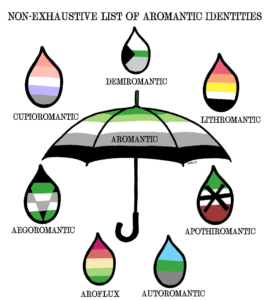
Aromanticism exists on a spectrum, allowing individuals to describe their experiences more precisely. Some common subcategories include:
- Gray-romantic: Rarely experiences romantic attraction
- Demiromantic: Experiences romantic attraction only after forming a strong emotional bond
- Recipromantic: Experiences romantic attraction only in response to someone else’s romantic interest
These labels help individuals communicate their experiences more accurately but are optional and flexible.
Why Understanding Aromantic Meaning Matters
Awareness of aromantic identity is important for several reasons:
- Promotes respect for diverse experiences of attraction
- Reduces stigma and invalidation
- Supports mental health and self-esteem
- Encourages inclusive communities and relationships
Recognizing aromantic experiences allows society to move beyond assumptions that romantic attraction is universal.

Common Misconceptions About Aromantic People
Aromantic individuals often encounter myths and misunderstandings. Common misconceptions include:
- Aromantic people cannot love or form connections
- Aromanticism is the same as being anti-romantic
- Aromantic people will eventually “find someone” and feel romantic attraction
- Aromantic people are lonely or incomplete
These myths are false. Aromantic people are fully capable of love, care, and deep emotional bonds; they simply experience attraction differently from the romantic norm.
Relationships and Aromanticism
Aromantic people can engage in various types of meaningful relationships, including:
- Friendships and chosen family
- Platonic partnerships
- Queerplatonic relationships (intense, committed non-romantic partnerships)
- Sexual relationships, if aligned with personal sexual orientation
Understanding that romantic attraction is not the only path to intimacy allows aromantic people to form fulfilling lives according to their preferences.
Challenges Aromantic People Face
Despite growing visibility, aromantic people may experience challenges such as:
- Societal pressure to seek romantic relationships
- Misunderstanding or dismissal from friends, family, and media
- Difficulty finding community and representation
Supportive environments, affirming language, and validation of identity are crucial to overcoming these challenges.
How to Support Aromantic Individuals
Supporting aromantic people involves respect, awareness, and inclusivity. Practical steps include:
- Use the term aromantic correctly and honor self-identification
- Avoid assuming romantic attraction or interest in dating
- Recognize and validate platonic and queerplatonic relationships
- Include aromantic perspectives in LGBTQ+ and educational spaces
These actions contribute to mental well-being, social inclusion, and positive identity formation.
Representation and Visibility
Media and educational representation of aromantic people remains limited but is growing. Inclusion in LGBTQ+ narratives, social media, and research helps normalize and validate aromantic experiences.
Organizations like The Aromantic Spectrum Awareness Week Network advocate for visibility and accurate information, creating resources for both aromantic people and allies.
Frequently Asked Questions About Aromantic Meaning
Can aromantic people have fulfilling relationships?
Yes. Aromantic people can form strong, loving, and lasting friendships, queerplatonic partnerships, and other meaningful connections.
Is aromanticism the same as being single or uninterested in romance?
No. Aromanticism is an orientation, not a choice about lifestyle or relationship status.
Can someone be both aromantic and sexual?
Absolutely. Aromanticism refers to romantic attraction, not sexual attraction. Some aromantic individuals are sexual, while others are asexual or somewhere in between.
Understanding Aromantic Meaning
In essence, aromantic meaning reflects a romantic orientation where individuals experience little or no romantic attraction. Aromantic people are capable of love, meaningful connection, and deep bonds, even if romance is not part of their lives.
Respecting and understanding aromantic identities fosters inclusion, reduces stigma, and validates the diverse ways humans form relationships. As society becomes more aware of different orientations, recognizing aromantic experiences ensures that all individuals can live authentically and with dignity.