
Agender Meaning: Understanding a Gender Identity Beyond the Binary
18/12/2025 · Updated on: 17/02/2026

The way we understand gender has expanded significantly over the past decades. As conversations around identity, inclusion, and human diversity grow, many people encounter terms that challenge traditional assumptions. One such term is agender.
- What Does Agender Mean?
- Why Understanding Agender Meaning Matters
- Agender vs. Sex Assigned at Birth
- Agender vs. Other Gender Identities
- How Agender People May Experience Gender
- Agender and Gender Expression
- Pronouns and Agender Identity
- Agender Identity and Mental Health
- Agender and Children or Adolescents
- Common Myths About Agender People
- Agender and Legal or Social Recognition
- How to Support Agender People
- Agender Representation and Visibility
- Is Agender a New Concept?
- Why Language Matters
- Frequently Asked Questions About Agender Meaning
- Understanding Agender Meaning with Respect and Clarity
What Does Agender Mean?
Agender describes a gender identity in which a person experiences little to no internal sense of gender. An agender individual may feel that they do not have a gender, that gender is irrelevant to who they are, or that traditional gender categories do not apply to them.
In simple terms, agender can be understood as:
- Having no gender
- Feeling neutral or indifferent toward gender
- Existing outside of gender categories
Agender is a valid and recognized identity within the broader spectrum of gender diversity. It reflects how a person understands themselves internally, not how they look, dress, or behave.
Why Understanding Agender Meaning Matters
Understanding agender meaning is important for several reasons:
- It supports respectful communication
- It reduces stigma and misinformation
- It helps create inclusive environments
- It validates lived experiences
For agender individuals, having their identity recognized can significantly improve mental well-being and feelings of belonging. For others, understanding agender helps build empathy and social awareness.
Agender vs. Sex Assigned at Birth
Agender meaning is gender identity, not biological sex. Sex assigned at birth is typically based on physical characteristics such as chromosomes, hormones, and anatomy. Gender identity, on the other hand, refers to a person’s internal sense of self.
An agender Meaningperson may have been assigned male, female, or intersex at birth. Their agender meaning identity does not negate their biology, but it is not defined by it.
This distinction is supported by major health and human rights organizations, including the World Health Organization (WHO – Gender).

Agender vs. Other Gender Identities
Agender is sometimes confused with other identities. Understanding the differences helps clarify what agender uniquely represents.
Agender vs. Nonbinary
Nonbinary is an umbrella term for gender identities that do not fit exclusively into “male” or “female.” Agender falls under the nonbinary umbrella, but not all nonbinary people are agender.
While some nonbinary individuals experience a mix of genders or a fluid gender, agender individuals typically experience an absence of gender.
Agender vs. Genderqueer
Genderqueer often emphasizes challenging or rejecting traditional gender norms. Agender meaning may overlap with this, but it is specifically focused on not identifying with gender at all.
Agender vs. Cisgender and Transgender
Cisgender people identify with the gender assigned to them at birth. Transgender people identify with a gender different from their assigned gender.
Agender individuals may or may not consider themselves transgender, depending on personal interpretation. There is no single correct label, and self-identification is what matters most.
How Agender People May Experience Gender
There is no single agender experience. People who identify as agender may describe their relationship with gender in different ways.
- Some feel completely disconnected from gender concepts
- Some feel gender-neutral rather than genderless
- Some feel that gender language does not describe their inner experience
Whether someone identifies as agender, nonbinary, or another identity, understanding pronoun usage is essential for respectful communication.
Importantly, agender identity is not a rejection of gender for others. It is simply a reflection of how one individual experiences themselves.
Agender and Gender Expression
Gender expression refers to how someone presents themselves through clothing, hairstyle, voice, or behavior. Gender expression does not determine gender identity.
Agender people may express themselves in many ways:
- Masculine
- Feminine
- Androgynous
- Neutral
- Changing over time
An agender person’s appearance does not invalidate their identity. Just as with all genders, expression is personal and contextual.
Pronouns and Agender Identity
Pronouns are a form of language used to refer to someone. Agender people may use a variety of pronouns, including:
- They/them
- She/her
- He/him
- Neo-pronouns
- No pronouns (using their name instead)
There is no single set of pronouns that all agender people use. The most respectful approach is to ask or follow the pronouns someone shares.
Organizations like GLSEN emphasize the importance of respecting pronouns in creating inclusive spaces (GLSEN – Pronouns Guide).
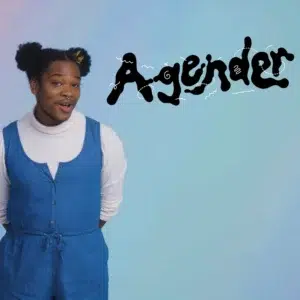
Agender Identity and Mental Health
Research consistently shows that LGBTQ+ individuals, including agender people, experience better mental health outcomes when their identities are respected and affirmed.
Challenges may arise due to:
- Social misunderstanding
- Pressure to conform to gender norms
- Lack of representation
- Discrimination or invalidation
Supportive families, inclusive communities, and access to affirming mental health care are protective factors.
The American Psychological Association recognizes the importance of gender-affirming environments.
Agender and Children or Adolescents
Some individuals recognize their agender identity in childhood or adolescence, while others do so later in life. Early self-awareness does not mean confusion; it often reflects honest self-reflection.
Experts recommend:
- Listening without judgment
- Avoiding pressure to label or unlabel
- Providing age-appropriate information
Allowing young people to explore identity safely supports healthy development and self-esteem.
Common Myths About Agender People
Misinformation can lead to misunderstanding. Common myths include:
- Agender people are “confused”
- Agender is a trend or phase
- Agender people reject biology
- Agender means lacking personality or identity
In reality, agender identity is a stable and meaningful experience for many people. It does not erase personality, values, or relationships.
Legal recognition of gender diversity varies by country and region. Some jurisdictions allow gender-neutral or unspecified gender markers on official documents.
While legal recognition can be affirming, many agender people prioritize everyday respect—being listened to, believed, and treated with dignity.
Human rights organizations such as the United Nations advocate for recognition of diverse gender identitie-
How to Support Agender People
Support does not require complete understanding—only respect and openness.
Practical Ways to Be Supportive
- Use correct pronouns and names
- Avoid assumptions about gender
- Listen more than you speak
- Educate yourself from reliable sources
Small actions can have a significant positive impact.
Agender Representation and Visibility
Visibility helps normalize diverse identities. Increased representation in media, education, and research allows agender people to see themselves reflected in society.
While representation is still limited, progress continues as more voices are heard and respected.
Is Agender a New Concept?
Although the term “agender” is relatively modern, the experience it describes is not new. Across cultures and history, there have always been individuals who did not identify with gender norms.
Language evolves to describe human experiences more accurately. Agender is one such term that provides clarity where older frameworks fell short.
Why Language Matters
Words shape understanding. Having a term like agender allows people to articulate their experiences and find community.
Respectful language also reduces harm by validating identities rather than dismissing them.
Frequently Asked Questions About Agender Meaning
Is agender the same as being gender-neutral?
They are related but not identical. Gender-neutral can describe expression or language, while agender refers to identity.
Can someone be agender and still use gendered terms?
Yes. Language choices are personal and contextual.
Does agender identity require medical transition?
No. Medical decisions are individual and not required to validate identity.
Understanding Agender Meaning with Respect and Clarity
Understanding agender meaning is about recognizing that not everyone experiences gender in the same way. For agender individuals, the absence of gender is not a lack—it is simply their reality.
By approaching gender diversity with curiosity, empathy, and evidence-based information, we create spaces where people can exist authentically.
Agender identities remind us that humanity cannot be reduced to simple categories. Respecting that complexity benefits everyone.