
Anxiety and Self-Care: Useful Psychological Techniques for Intersex People
27/01/2026

Anxiety is a common human experience, but for intersex people it often carries additional layers shaped by stigma, medical experiences, secrecy, and lack of representation. Navigating healthcare systems, social expectations, and personal identity can create chronic stress that deserves compassionate attention.
This article explores anxiety through an intersex-informed lens and presents practical, evidence-based psychological strategies centered on Self-Care. These approaches are not about “fixing” individuals but about supporting emotional wellbeing, autonomy, and resilience.
- Understanding Anxiety in Intersex Experiences
- Why Self-Care Is Not Optional
- Recognizing Signs of Anxiety
- Grounding Techniques for Acute Anxiety
- Cognitive Techniques: Working With Thoughts
- Body-Based Approaches to Anxiety
- Emotional Self-Care and Self-Compassion
- Creating Personal Boundaries
- The Role of Routine and Predictability
- Social Support and Shared Care
- When Professional Support Is Helpful
- Reframing Self-Care as Resistance
- Practical Self-Care Plan for Daily Life
- Final Thoughts: Care as a Lifelong Practice
Understanding Anxiety in Intersex Experiences
Anxiety is not a personal failure or weakness. It is a natural response to perceived threat or uncertainty. For many intersex people, anxiety may be shaped by:
- Medical trauma or repeated examinations
- Lack of informed consent in early care
- Fear of disclosure or misunderstanding
- Social isolation or invisibility
These experiences can accumulate over time, creating persistent stress responses that affect mental and physical health.
Why Self-Care Is Not Optional
In many cultures, Self-Care is framed as indulgent or secondary. In reality, it is a foundational aspect of mental health—especially for communities that face systemic stressors.
For intersex people, self-directed care can serve as:
- A tool for emotional regulation
- A buffer against burnout and anxiety
- A way to reclaim bodily autonomy
Psychological research consistently shows that intentional self-support practices reduce anxiety and improve quality of life.
Recognizing Signs of Anxiety
Anxiety does not always look the same for everyone. Common signs include:
- Racing thoughts or constant worry
- Muscle tension or fatigue
- Difficulty concentrating
- Sleep disturbances
Recognizing these signals early allows for proactive Self-Care rather than crisis response.
Grounding Techniques for Acute Anxiety
Grounding techniques help bring attention back to the present moment when anxiety feels overwhelming.
Breathing-Based Grounding
Slow, controlled breathing activates the parasympathetic nervous system.
- Inhale slowly for four counts
- Exhale for six counts
- Repeat for several minutes
This simple practice can reduce physiological arousal and support emotional regulation.
Sensory Awareness
Noticing physical sensations—sounds, textures, or temperature—can interrupt anxious spirals.
These tools are widely recommended in clinical psychology, including by the American Psychological Association.
Cognitive Techniques: Working With Thoughts
Anxiety is often fueled by unexamined thought patterns.
Cognitive Reframing
This technique involves gently questioning anxious assumptions.
- What evidence supports this thought?
- Is there an alternative explanation?
- What would I say to a friend in this situation?
Practicing cognitive flexibility is a core component of sustainable Self-Care.
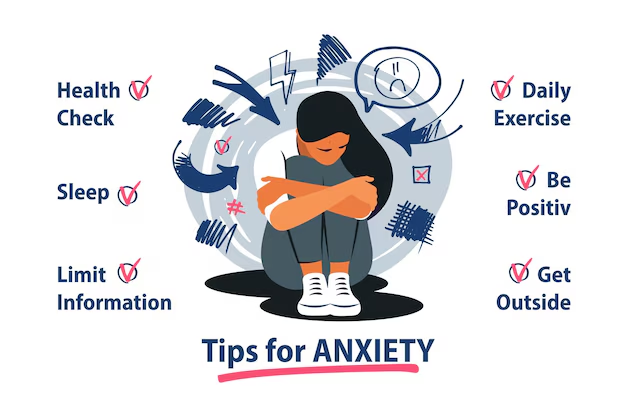
Body-Based Approaches to Anxiety
The body stores stress, especially after repeated medical or social stressors.
Movement as Regulation
Gentle movement—such as walking, stretching, or yoga—can help release tension and improve mood.
Movement does not need to be intense or goal-oriented to be effective.
Progressive Muscle Relaxation
This method involves intentionally tensing and releasing muscle groups to reduce physical anxiety.
Health systems such as the UK National Health Service (NHS) recommend these techniques for anxiety management.
Emotional Self-Care and Self-Compassion
Intersex people are often taught—implicitly or explicitly—to minimize their emotional needs.
Emotional Self-Care includes:
- Allowing emotions without judgment
- Validating personal experiences
- Letting go of internalized shame
Self-compassion practices have been shown to reduce anxiety and improve resilience.
Creating Personal Boundaries
Boundaries are a critical but often overlooked form of Self-Care.
Healthy boundaries may involve:
- Limiting intrusive questions
- Choosing when and how to disclose personal information
- Taking breaks from stressful environments
Boundaries protect energy and reduce chronic anxiety.
The Role of Routine and Predictability
Anxiety thrives in uncertainty.
Simple routines—such as consistent sleep times, regular meals, or scheduled rest—provide structure that supports nervous system regulation.
Predictability is not rigidity; it is a stabilizing form of Self-Care.
While self-care emphasizes individual practices, it does not mean isolation.
Supportive relationships can:
- Reduce feelings of isolation
- Normalize emotional experiences
- Offer perspective during anxious periods
Community care complements personal Self-Care rather than replacing it.

When Professional Support Is Helpful
Sometimes anxiety exceeds what personal strategies can address.
Seeking professional help is not a failure—it is a form of informed care.
Therapists trained in trauma-informed or LGBTQIA+ inclusive approaches are often better equipped to support intersex clients.
Global mental health guidance from the World Health Organization emphasizes access to appropriate psychological care as a human right.
Reframing Self-Care as Resistance
For marginalized communities, Self-Care is not just personal—it can be political.
Choosing rest, boundaries, and emotional support challenges systems that expect endurance without support.
Self-care becomes a way of affirming worth and humanity.
Practical Self-Care Plan for Daily Life
Consistency matters more than intensity.
- Choose one grounding practice
- Schedule one restorative activity weekly
- Identify one safe person or space
Small, repeatable actions build sustainable Self-Care.
Final Thoughts: Care as a Lifelong Practice
Anxiety does not define intersex people—but acknowledging its presence can open the door to healing.
Through intentional Self-Care, psychological techniques, and supportive relationships, it is possible to reduce distress and build emotional resilience.
Care is not a destination. It is a practice that evolves alongside identity, experience, and growth. Everyone deserves tools that honor their complexity and support their wellbeing.